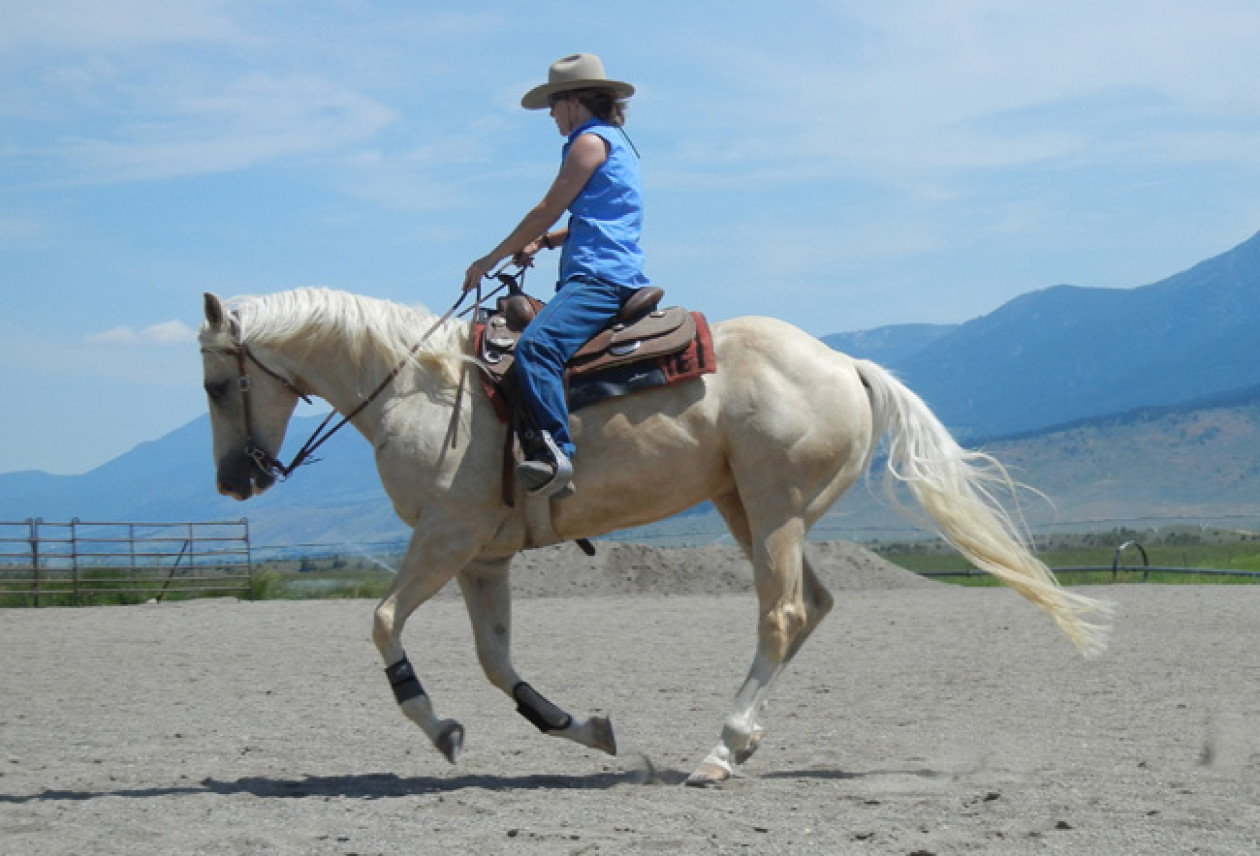
Bridling 101

I think people have more trouble with bridling than with any other thing they do with their horse. I say this because not only is it such a common complaint that I hear from clients, but I see it at horse shows, when I’ve been a bit judge, at 4-H clinics, poker rides, etc….  It’s really amazing to me that so many horses tolerate the way they are bridled. Really, not that many resist being bridled, very few in fact. It is a very common complaint from riders though.

The most common things I hear are “my horse won’t open his mouth” or “my horse doesn’t like his ears touched”. Both of these result in the horse raising its head to heights that make it difficult to bridle.

A person needs to get comfortable handling their horses mouth and ears, as well as the horse needs to get comfortable with the person handling these parts. Once this is accomplished we can move on to bridling.

I hold the top of the bridle in my left hand with the reins draped over my left elbow. I put my right hand between the ears, my wrist is lightly resting on the horses poll.

I  bring the headstall straight up the midline of my horses face and take hold of the top of the bridle with my right hand.

I then move my left hand down to the bit. I bring my hand up between the chin strap and bit. Each of my fingers has a job.

My baby finger and ring finger lightly press against the chin strap to keep it from going in the mouth with the bit. My middle and index finger guide the bit into the mouth. My thumb parts the lips and encourages the horse to open its mouth.

If the horse is hesitant to open its mouth with just the presence of my thumb in there, I will slowly work my thumb around, then wiggle my thumb on the tongue, then press my thumb against the gum if I’m still not getting a response. The thing to remember here is, do as little as you have to and as much as you need to. But give the horse a chance to respond before you ask for more.

This is the point where some folks get impatient. They may even bump the bit against the teeth to encourage the horse to open the mouth. Once a horse has had a metal bit banged against its teeth, it has a genuine reason to dislike being bridled. Resist the temptation to do this and just use your thumb and be patient, wait it out.

When the horse opens its mouth I guide the bit in and lift my right hand which is between the horses ears. I lift my right hand which lifts the bit up into the corners of the horses mouth. I hold onto the headstall with enough pressure to keep the bit lifted in the mouth.

Then I switch hands. I bring my left hand up and take ahold of the top of the headstall, which frees up my right hand. I hold the headstall out away from the horses ear about 4 or 5 inches and gently fold the right ear under the top and between the browband.

I move my left hand over to the left side of the top of the headstall holding it out about 4 or 5 inches away from the ear and fold the left ear forward with my right hand.

I pull the foretop out from under the browband, get the mane straight around the poll, then attach the throat latch. The throat latch does not need to be tight, but you don’t want it so loose that it dangles below the jaw.

When I bridle my horse, I want its eye to be lower than my eye. If my horses eye is above my eye, it’s too high. They can just as easily hold their head a little lower.

I’ve had some horses hold their head down quite low. That’s not a bad problem to have. They eventually will hold it in a more normal position.

If at any time the horse raises its head, I just apply some pressure behind the poll on the neck and suggest they lower their head. I just hang in there until they are comfortable keeping their head down a little bit. If the horse is trying to work with me and raises its head a little, but is willingly taking the bit, I may forgive them for a little mistake and continue bridling. Through experience, you’ll know if you need to correct it or accept it by what their attitude is. If they are trying to work with me I may accept some things that are not perfect. There are some things, that in their mind, they are doing what you’ve asked and you should go with it. As I said, this comes with experience.

Bridling your horse isn’t a win or lose situation, it’s not a competition. It’s about meeting your horses needs and preparing them so that bridling is nothing more than brushing them. It’s just one more thing you do before you ride. Remember to breath, relax, take your time, don’t be in a hurry, this is not a timed event. I tell folks that are having issues to see how long they can take to bridle their horse. Often that thought will slow them down enough to make their horse happy.

Remember that we are working with our horse in a partnership, yet we will be the leader of that partnership. If we act like a good leader the majority of the time, but when we begin bridling our horse we become scared, nervous and easily intimidated, your horse will sense this and respond accordingly.

So take your time, be a good leader and enjoy the ride because there is nothing more fun!

Knowledge Gained

Knowledge Gained

You will never have a dull day if you have a thirst for knowledge.

Educational opportunities are everywhere you look, you just have to look. No matter what subject of interest is to you, there is an abundance of ways to access knowledge about it.

When it comes to horses,whether it be riding horses, training horses, feeding or doctoring horses, you name it, gaining knowledge is as easy as a click away.

The internet has the answer to more questions than you can dream of. Practical veterinary sites, conformation diagrams, YouTube training videos, blogs, color and breed descriptions, bits and bitting information, it’s all out there. Then there’s Wikipedia, a whole site dedicated to information of every kind.

If you want personal attention, you may choose to ride with an instructor privately. Or you can ride in a clinic where you’ll gain from a little personal attention and will also get a chance to see the instructor coach every other student through issues that there is a good chance you have or will experience. You can audit a clinic if you don’t have a horse or money is an issue at the time.

Some people are shy or embarrassed to admit they don’t know how to do certain things on their horse. Just remember, every rider out there started at the beginning. They all had to pay their dues. They (hopefully) learned from their mistakes.

I had the pleasure of riding with the exceptional trainer, Joe Wolter, in August. I rode with Joe about 10 or 12 years ago in four different clinics. I’ve missed riding with him every since.

Joe was lucky enough to learn from the great brothers, Tom and Bill Dorrance, among others. While visiting with Joe, I talk about following his program. He is quick to say that it isn’t “his” program, that he has been blessed to gain knowledge from so many great trainers. Joe is a humble man. I reword my comment and say that I try to follow the techniques that Joe has learned from others. That makes him happy.

I will admit that some of the philosophies that Joe taught me years ago were difficult to grasp until I had more experience. Not all of it made sense right away.

At this last clinic, virtually everything that Joe taught made perfect sense and I’ve been able to apply all of the drills and techniques we worked on to the horses I have in training.

When I rode with Shawn Flarida in a reining clinic five years ago he stated that, “You have to have a certain amount of knowledge before you can really learn”. In this case he was referring to riding/training the reining horse.

I’ve always read magazines (most are horse related) and newspapers while I eat lunch. With the purchase of an iPad, I still read magazines or books, but also surf a little. After watching a Joe Wolter YouTube video the other day, I noticed a short Tom Dorrance video. I clicked on it and he talked about how to help a horse lift the outside shoulder when you are suggesting he turn one direction and his shoulder continues to take him in a different direction. A very common experience with green horses and many not-so-green horses.

Right after lunch, I was able to put this different technique to work on two different green horses I am riding with success.

Knowledge can truly be just a click away.

Kitty-A New Lesson Horse

I picked up Kitty (a then four year old mare) one year ago. She only had 20 rides on her at that time. She had been packed in the mountains for a weekend as well. I couldn’t resist when I saw her. I just had to bring her home. I still have that same problem that little kids have, “Daddy can we keep her; please, please Daddy?”
There are some things that are tougher than others to outgrow in life.

I rode her here at home a little bit, but I found myself mostly taking her to the mountains.

She went to mountain lakes, to the Madison range for four days, rode out on some ranches and I took her to a Joe Wolter cow working clinic.

She proved to be sensitive, yet tough. I really enjoyed her quiet nature. No fuss, no muss, no drama. I could just hop on and go. Every once in a while I really appreciate having a horse around that I can do that with. Kitty has been my go-to girl for that.

This year I increased the pressure on her a bit. Some of March and all of April I rode her regularly. I introduced lateral flexion, I expected more of her in her transitions, I worked on improving her ability to guide. I didn’t just lope circles, I would pick out places to lope to. I steer her here and steer her there, then leave her alone.

She’s a long ways from being what I would call a broke horse.

But the other day, I needed to put a student on a horse other than our regular lesson horse, Baron. I choose Kitty because I trust her to be level headed.

It’s a bit of a graduation when this happens. When a colt that I have considered green gets enough education under their belt that I trust them with my students.

I was very happy with the outcome. She performed quite well for my student. She really never missed a beat.

This student just happens to ride english, which not many of my students do. Kitty isn’t far enough along to be ridden “on the bit”. My student had to ride her with a little slack in the reins but Kitty did her best in every other respect.

She’s a good little girl that Kitty. I think I’ll keep her.

The Only Thing Constant Is Change

Products come and products go. Say goodbye to GoDaddy Blogcast and say hello to WordPress.

Welcome to Wendy Deans Horsemanship blog.

It’s the same Wendy, same trainer, same instructor, same ranch, dogs, horses and husband, just a different blog software.

Thanks for joining me; go ahead, settle in for the ride!